Preservation as Practise.
Conservation as Care.
The Programme
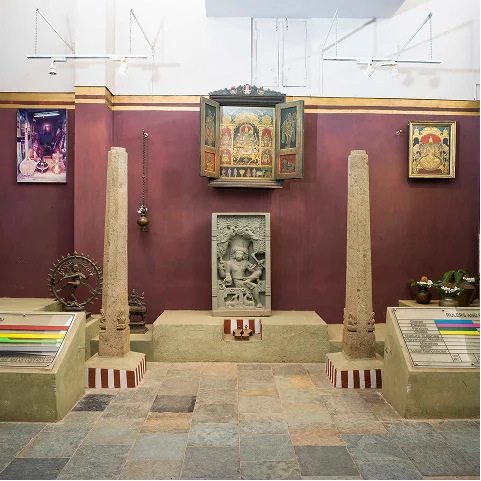
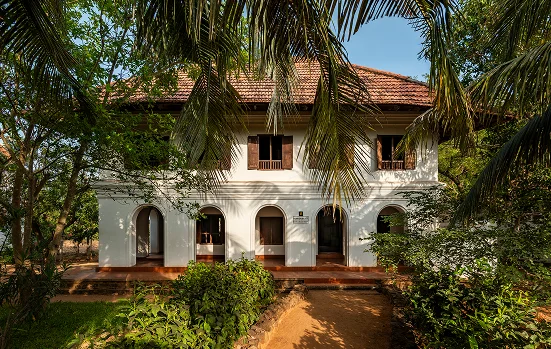
DakshinaChitra holds over 10,000 objects across 19 heritage homes:
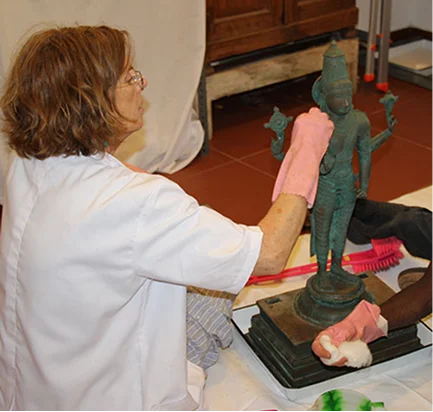
Textiles, wooden artefacts, leather puppets, scrolls, ceramics, Tanjore painted surfaces, sculptures, and works on paper. Each object was acquired as part of the context of a specific house and community. Keeping them in stable condition is a permanent part of the museum's work.
When an object shows signs of damage, it is removed from display and brought to the conservation laboratory, where it is assessed, treated, and returned to controlled storage or reinstalled once stable. The team documents every stage of treatment, building a long-term record of each object's condition over time.
The guiding principle is minimal intervention: stabilise what is at risk, treat only what cannot be preserved as-is, and avoid introducing materials that may cause harm over time.
How We Work

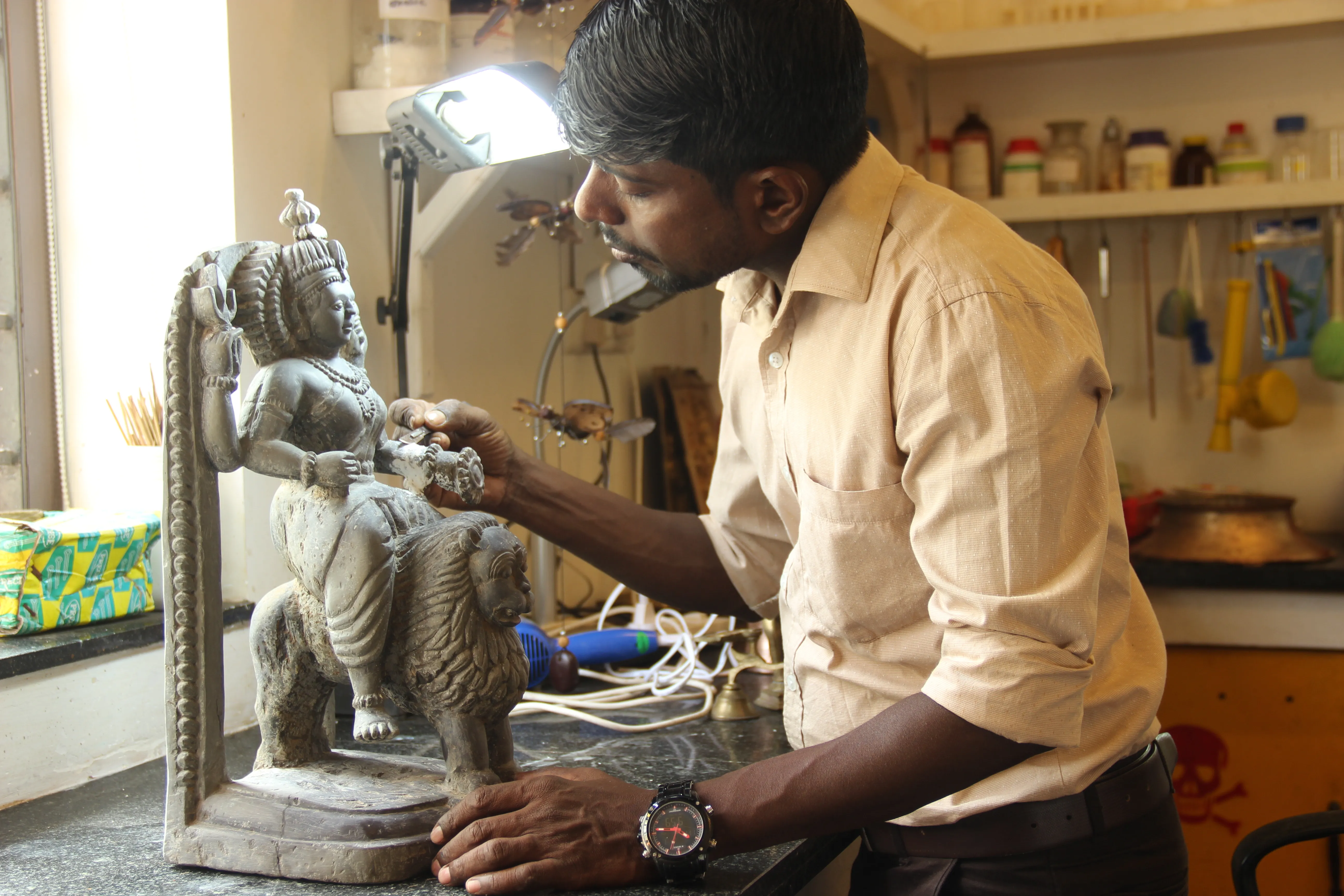
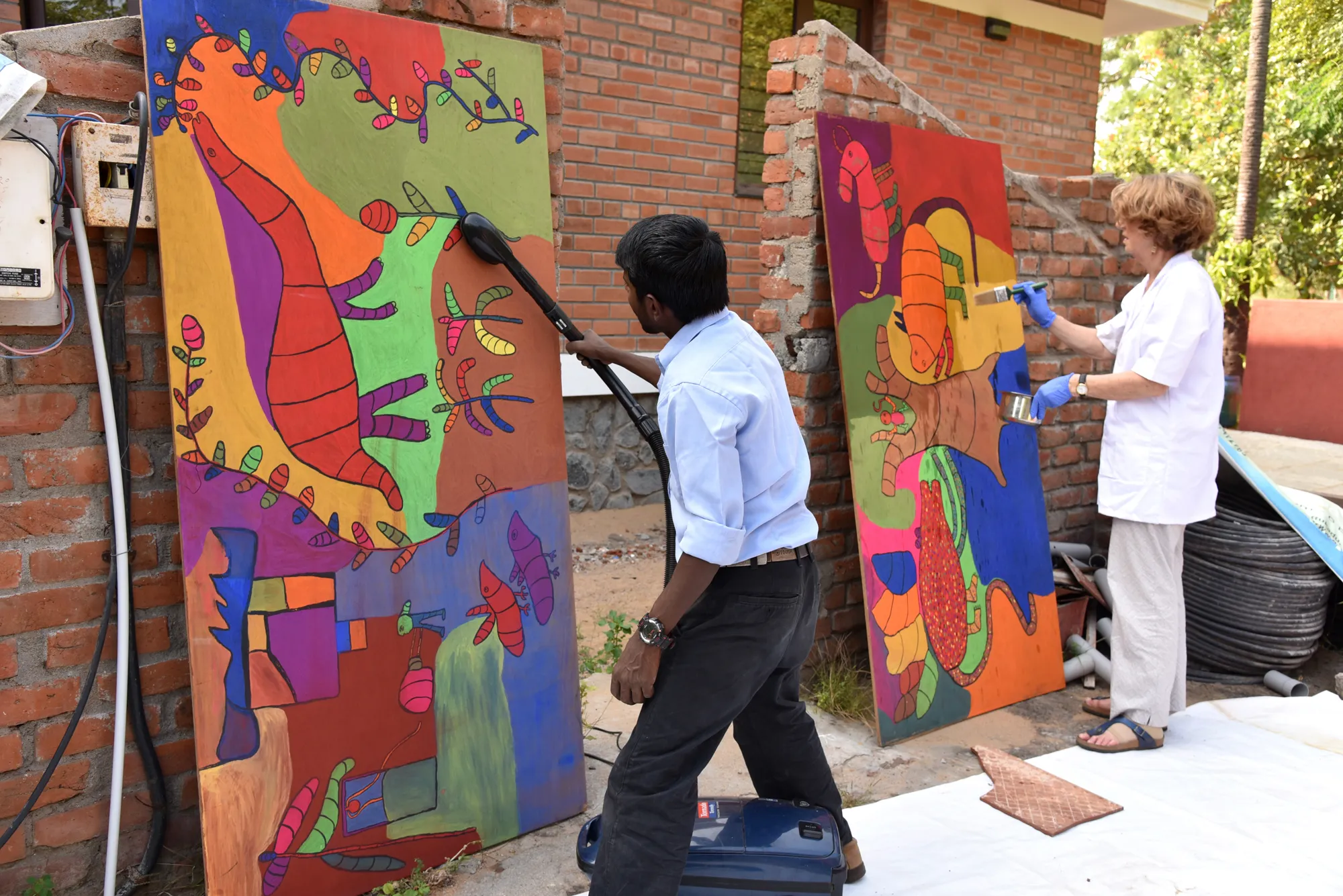
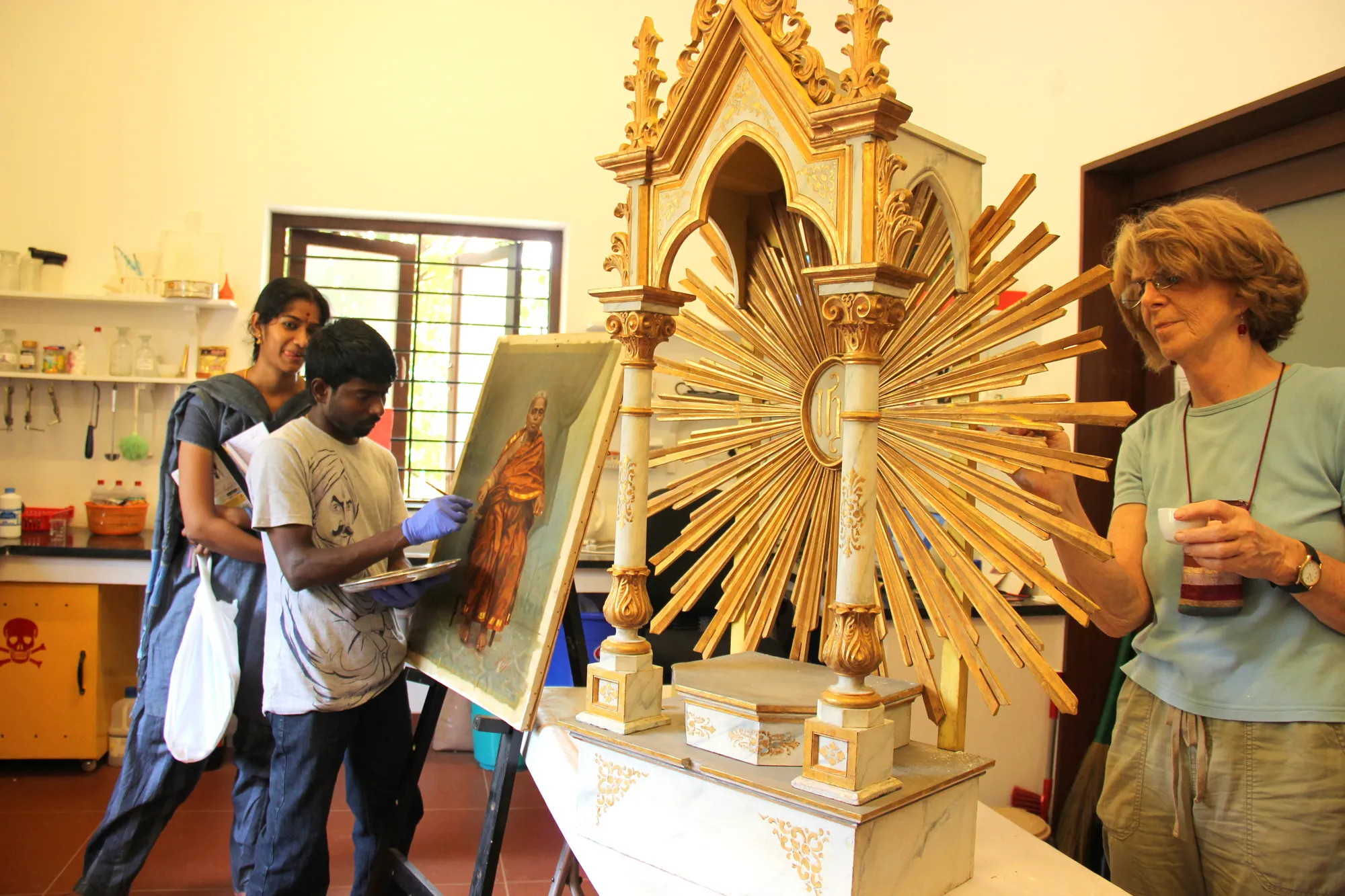
The conservation team deliberately limits the use of chemicals and avoids introducing foreign substances wherever possible. Chemical intervention, however well-intentioned, gradually affects the natural material it is meant to preserve. Where treatment is needed, it is typically confined to the careful removal of accumulated dirt and debris.
With paintings and sculptures, the conservator works on the affected area alone, touching up damaged passages with a fine brush. The aim is to recover an object's original appearance without overstating it: new pigments tend to appear too bright, and reproducing the muted tones of aged surfaces requires care. Objects originally finished in oil are treated as such; acrylics are used only where the work does not specifically require oil.
The most persistent threats to the collection are environmental. Among them, moisture is the most serious. Dust and heat present their own difficulties, but humidity is the hardest to control, particularly in Chennai's climate. Objects remain reasonably stable when shielded from direct sunlight; moisture is far harder to exclude.
The team's approach rests on three commitments: transparency in methods, respect for the source communities whose objects are in our care, and environmental responsibility in the materials used.
Conservation Philosophy

Living Heritage
Conservation at DakshinaChitra involves the care and preservation of material objects so future generations can view and learn from them.
Approach
We prioritise: transparency in our methods, respect for source communities, and environmental responsibility.
Conservation Areas
Textiles
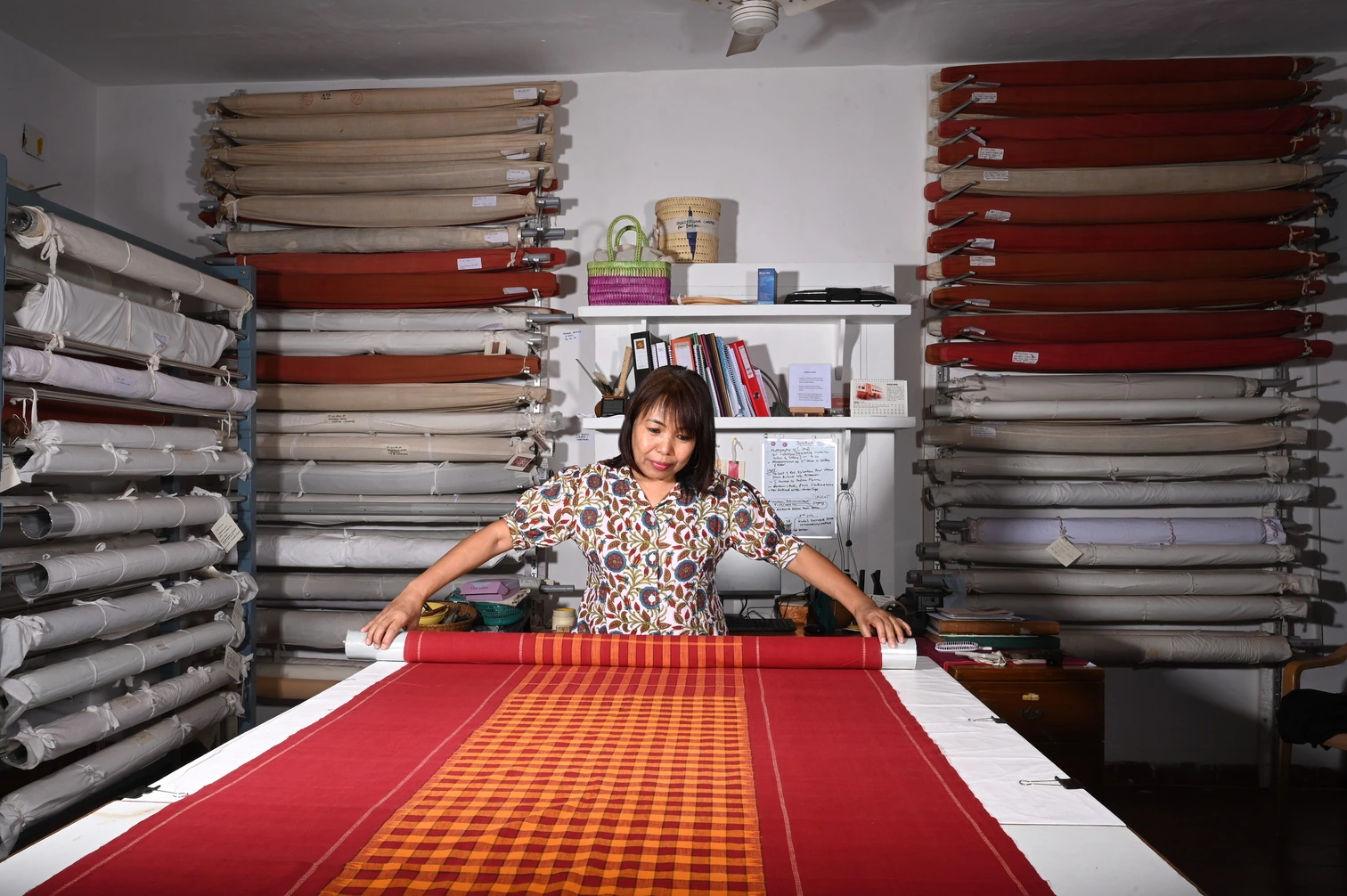
At Dakshinachitra, preventive conservation forms the foundation of textile collection care in display and storage. Conservation and restoration work on the collection emphasises preventive measures and retaining the object's integrity. Textiles have been collected from and donated by families across South India, representing vibrant weaving techniques and traditions that many weaving families no longer create. DakshinaChitra 's textile collection holds 1500 + types of textiles from Tamil Nadu, Kerala, Karnataka, Telangana and Andhra Pradesh including Chettinad handlooms, Venkatagiri saris, Ikkat saris, folk performance costumes, Kalamkari textiles, RMHK (Real Madras Handkerchief) handlooms and more which are on display in the houses and in climate-controlled storage.
Our Conservator's Special Skills
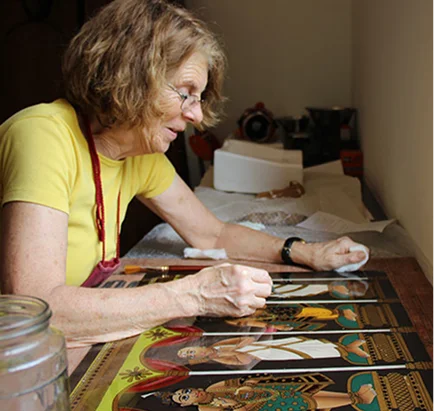
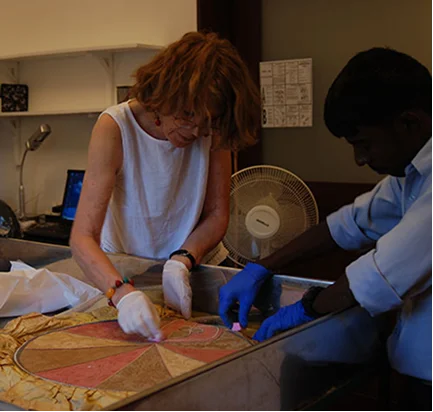
Among the conservation lab's specialisms, the conservation of works on paper holds particular interest for our conservator, Amir, who considers it the most Interesting. Restoring print/paintings on paper demands a slow and exacting approach: joining tears, lifting stains from the surface, and stabilising a fragile medium like paper.
Support Conservation
Contributions to DakshinaChitra's conservation fund support the maintenance, treatment, and documentation of the collection. You can direct a gift towards a specific heritage home or towards the care of a class of objects. Reach out to donations@dakshinachitra.net
Donate to Conservation
Open Wednesday to Monday:
10:00 AM – 6:00 PM on Weekdays (7 PM on Weekends)
Closed on Tuesdays | Open on public holidays
Photo: Chidambaram Meyappan (@this_is_chidam)